Key Takeaways
- •Bruxing (teeth grinding) can mean contentment OR stress — context determines which
- •Boggling (eye vibration) = peak contentment — your rat is extremely happy
- •Puffed fur = cold, sick, or stressed — always worth investigating
- •Rats grooming you = you're part of their social group, high compliment
- •The slow blink is a trust signal, same as in cats
- •Urine marking on you is a term of affection (sorry)
Why Rats Are So Readable
Compared to other small pets, rats are remarkably expressive. They have complex social lives, communicate extensively within their groups, and — critically for owners — much of their body language translates meaningfully to human interaction.
Once you learn to read them, rats become surprisingly transparent about their emotional states. Happy, stressed, sick, playful, trusting — it's all there to see.
The Big Two: Bruxing and Boggling
Bruxing
Bruxing is the rhythmic grinding or clicking sound your rat makes with their teeth. You'll often feel it as a subtle vibration if you hold them close to your face or chest.
Context is everything with bruxing:
Happy bruxing: Occurs when you're petting your rat, holding them close, grooming them, or just after they've eaten something they loved. It's a contentment sound — roughly equivalent to a cat's purr. Light, rhythmic, often accompanied by relaxed body posture.
Stressed bruxing: Occurs in unfamiliar situations, at the vet, during nail trimming, or when the rat is anxious. Tends to be more intense, accompanied by tense body posture, wide eyes, and attempts to escape.
The sound itself is similar; the surrounding context tells you which it is.
Boggling
Boggling is the spectacular payoff for any rat owner: the eyes visibly vibrate in their sockets while the rat is being petted. It looks slightly alarming the first time you see it.
It's actually the best possible sign. Boggling happens because the jaw muscles involved in intense bruxing are connected to the eye sockets, and the vibration transmits to the eyes. It means your rat is bruxing so intensely with contentment that their eyes are literally vibrating.
Boggling = your rat is extremely happy with you. It's as clear a communication as you can get.
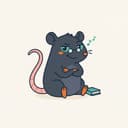
“I am boggling. This is the highest honor I can bestow. You are welcome.”
Ear Position
Rats have moveable ears that provide clear emotional signals:
Relaxed/slightly forward: Normal, alert, curious state. Your rat is engaged with their environment.
Flat against the head: Fear, submission, or illness. A rat with consistently flattened ears in their everyday environment is stressed or unwell.
One ear back, one forward: Listening, uncertain, evaluating a situation.
Fur and Body Posture
Puffed/Ruffled Fur
If your rat's fur looks puffed out, fluffed, or unkempt, take note. This means one of three things:
- Cold: The rat is trying to trap warmth. Check the temperature — rats are comfortable at 65-75°F.
- Sick: Puffed fur is a classic sign of illness. A rat who looks "fluffy" and is less active than usual needs a vet visit.
- Stressed/threatened: Rats puff up when confronting another rat or feeling threatened.
Hunched Posture
A rat sitting hunched, with their back arched and head low, is in pain or ill. This is a protective posture that minimizes pressure on their internal organs.
The Comfortable Drape
The opposite of hunched: a rat draped over your arm, limbs hanging loose, belly exposed, head lolling — this is peak relaxation. They feel completely safe.
Social Behaviors
Grooming You
When your rat nibbles at your hair, licks your hands, or grooms your skin, they're treating you as a member of their social group. Rats groom their bonded companions. This is a genuine expression of affection and trust.
Power Grooming
Confusingly, rats also "groom" each other as a mild dominance assertion. If a rat grabs your hand firmly and gives it an almost aggressive grooming session — not biting, but very insistent — they may be asserting dominance. This is more of an "I'm in charge here" message than an affectionate gesture.
Wrestling and Play
Rats play wrestle constantly. Normal rat play involves chasing, pinning, and lots of vigorous movement. You'll hear thumping and squeaking.
How to tell play from fighting:
- Play: Both rats take turns being on top, no injuries, returns quickly to normal behavior
- Fighting: One rat is consistently being chased or pinned without reciprocation, squealing is prolonged and distressed, injuries to skin or ears
The Slow Blink
Rats, like cats, use slow blinking as a trust signal. A rat that looks at you and slowly closes and opens their eyes is communicating comfort and trust. You can return the gesture — slow blink back at your rat, and they often respond in kind.
Urine Marking
This one is less pleasant to learn: rats mark things — and people — with urine to claim them as part of their territory and social group. Being marked by your rat is, in rat terms, a significant compliment. "You are mine. I am claiming you."
This is more common in unneutered males. Neutering significantly reduces marking behavior.
🩺
Have a concern about your rat?
Browse our species-specific care guides for expert advice on diet, housing, health, and behavior.
Explore Care Guides