Why Mice Are Hard to Assess
Mice are prey animals who evolved to hide illness. By the time symptoms are obvious, a mouse may be critically ill. Learn the subtle early signs — and check your mouse regularly so you know what's "normal" for them.
Key Takeaways
- •Puffed/fluffed fur = mouse is cold, sick, or in pain — always investigate
- •Discharge from eyes or nose = potential respiratory infection
- •Hunched posture = pain
- •Rapid, visible weight loss = urgent — feel ribs to check
- •Crunchy or oily fur texture can indicate health issues
- •Normal mice should be active, curious, and bright-eyed during active hours
The Prey Animal Problem
Mice, like all prey animals, are evolutionarily programmed to hide weakness. A mouse in the wild who looks sick gets eaten. So their instinct is to appear as normal as possible, even when genuinely unwell.
This means that visible illness in mice is often already advanced illness. By the time your mouse looks obviously sick, they may have been feeling poorly for days. By the time they look critically ill, they may have hours.
The solution is knowing the subtle early signs — and knowing what your individual mouse's normal looks like so deviations are immediately obvious.
Head-to-Tail Health Check
Eyes
Healthy: Bright, clear, fully open, symmetrical.
Concerning:
- Discharge (clear or colored) in or around the eye
- Swelling or puffiness around one or both eyes
- One eye smaller than the other (could indicate injury, abscess, or tumor)
- Dull or half-closed eyes (pain or illness)
- "Squinting" one eye more than the other
Nose
Healthy: Clean, dry, no discharge.
Concerning:
- Any discharge (clear, white, yellow, or red/brown)
- Redness around the nostrils
- Constant sneezing (occasional sneezes when dusty bedding is introduced are normal; frequent sneezing is not)
- Red-brown discharge (porphyrin — indicates stress or illness in mice)
Fur
This is one of the most informative health indicators:
Healthy fur: Smooth, glossy, lying flat, even coverage.
Concerning:
- Puffed/fluffed: The mouse looks larger than normal because their fur is fluffed up. This indicates they're cold, sick, or in pain. A mouse sitting fluffed in a corner is a sick mouse.
- Rough texture: Not as alarming as fluffed, but dull, rough fur can indicate poor nutrition or chronic stress.
- Crunchy or oily texture: This was noted in Reddit discussions of sick mice — a crunchy or greasy quality to the fur can indicate endocrine problems, dehydration, or other systemic illness.
- Matted fur: Suggests the mouse is not grooming — loss of grooming is a significant health signal.
- Patchy fur loss: Can indicate mites, ringworm, barbering (fur being pulled by cage-mate), or hormonal issues.
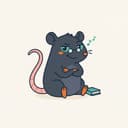
“You noticed my fur looked different. You did the right thing. Subtle changes in fur texture are an early warning system. I appreciate that you were paying attention.”
Posture and Movement
Healthy: Upright, active, normal gait, quick movements.
Concerning:
- Hunched posture: Back arched, head lowered — indicates pain
- Labored movement: Moving slowly, carefully, or reluctantly — can indicate pain, injury, or neurological issues
- Head tilt: Ear infection or neurological problem — vet immediately
- Circling or rolling: Neurological emergency — vet immediately
- Limping or favoring a limb: Injury or arthritis
Weight
Weight loss in mice is rapid and serious. A mouse who loses 10-15% of their body weight is in a medically significant state.
How to check: Gently cup the mouse and feel their spine and ribs. You should feel ribs, but they shouldn't be prominently protruding. Visible hip bones or protruding spine indicates significant weight loss.
For accuracy: use a kitchen scale to weigh your mice every 1-2 weeks. Note the numbers. Sudden drops are immediately actionable.
Breathing
Healthy: Quiet, even, not visibly labored.
Concerning:
- Visibly labored breathing (abdominal effort with each breath)
- Clicking or crackling sounds
- Wheezing
- Breathing through open mouth
- Rapid respiratory rate at rest
Any respiratory symptom warrants vet attention. Mice respiratory infections can progress quickly.
Activity and Behavior
Healthy mouse during active hours (late afternoon/evening): Curious, moving around the cage, investigating, foraging, wheel-running.
Concerning:
- Sleeping in unusual positions or locations (especially on the open floor rather than in nest)
- Not responding to sounds or movement near the cage
- No interest in food or treats
- Sitting still for extended periods when normally active
- Loss of normal vocalizations
When to See a Vet
Immediately for:
- Obvious respiratory distress
- Head tilt or neurological symptoms
- Visible injury
- Not eating for 24+ hours
- Extreme weight loss
Within 24-48 hours for:
- Discharge from eyes or nose
- Fur changes (fluffed, matted, textural changes)
- Persistent sneezing
- Behavioral changes lasting more than 24 hours
Finding an exotic vet for mice: Mice are seen by fewer vets than rabbits or guinea pigs. Search for "exotic vet small mammals" and call to confirm they see mice specifically.
🩺
Have a concern about your mouse?
Browse our species-specific care guides for expert advice on diet, housing, health, and behavior.
Explore Care Guides