GI Stasis Emergency Protocol
If your guinea pig has NOT eaten, NOT produced droppings, or is showing hunched posture and grinding teeth — this is an emergency. Contact an exotic vet IMMEDIATELY. GI stasis can be fatal within 12-24 hours. Do not wait and see.
Key Takeaways
- •GI stasis = the gut stops moving — it is immediately life-threatening
- •Guinea pigs must eat constantly; any pause in gut movement causes rapid deterioration
- •Emergency signs: no droppings, not eating, hunched posture, teeth grinding, distended belly
- •Time is critical — go to a vet within 4-6 hours of noticing symptoms
- •Never give human pain medications — many are toxic to guinea pigs
- •Prevention: unlimited hay, exercise, stress management
What Is GI Stasis and Why Is It So Dangerous?
GI stasis (gastrointestinal stasis) is a condition where the normal movement of the digestive tract slows or stops completely. In a guinea pig, this is a rapid, life-threatening emergency.
Here's why it's so dangerous: guinea pigs have extremely delicate digestive systems that rely on constant movement. Unlike humans, a guinea pig who doesn't eat for a few hours isn't just hungry — their gut begins shutting down.
When the gut stops moving:
- Food and gas accumulate in the digestive tract
- Bacteria that normally live in balance begin overgrowing
- Toxic byproducts build up
- The guinea pig becomes systemically ill very quickly
- Without treatment, death occurs within 12-24 hours
Recognizing the Signs
First Signs (Act Now — Call the Vet)
- Significantly fewer droppings than normal, or no droppings
- Eating less or showing no interest in food
- Quieter than usual
- Less active
Clear Emergency Signs (Go to Vet Immediately)
- No droppings for several hours
- Completely refusing food including favorite vegetables
- Hunched posture — sitting in a hunch with back rounded, not flat
- Teeth grinding (loud, persistent)
- Visible distension of the belly (bloating)
- Pressing belly against the ground
- Labored breathing (diaphragm compressed by gas-filled gut)
How to Monitor
Know your guinea pig's baseline. If you know how many droppings they normally produce in a day (roughly 100 pea-sized droppings is typical for a healthy adult), a sudden reduction is immediately obvious.
Check morning and evening — particularly for droppings in their enclosure.
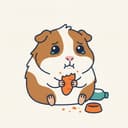
“I haven't eaten the bell pepper. Yes, I know. This is unprecedented. I need you to understand this is serious. Please stop calling it 'a phase.' Please call the vet.”
What to Do While Getting to the Vet
If you cannot get to a vet immediately (middle of the night, no exotic vet available), there are supportive care steps while you arrange emergency care. These are NOT a substitute for veterinary treatment:
Keep them warm: Cold guinea pigs in stasis deteriorate faster. Maintain 65-75°F.
Offer hay constantly: Even if they're not eating much, keep fresh hay available. The smell may stimulate some gut activity.
Gentle belly massage: Very gentle circular massage on the belly (front to back direction) can help stimulate gut movement. Don't apply pressure — just gentle circular strokes. Do this for 2-3 minutes at a time.
Critical Care: If you have Emergency Critical Care for Herbivores (Oxbow), you can syringe feed small amounts (1-2mL) to maintain some gut content. This is valuable but NOT a treatment for stasis.
Hydration: Offer water by syringe if they won't drink voluntarily.
What NOT to Do
Never give human pain medications. Ibuprofen, acetaminophen, and aspirin are toxic to guinea pigs. Many common human medications cause rapid organ failure in small animals.
Don't wait 24 hours to see if it improves. GI stasis does not improve on its own. Every hour without treatment decreases survival odds.
Don't force-feed large amounts. Small syringe amounts of Critical Care are helpful; forcing large amounts into a bloated pig can cause aspiration and worsen the situation.
Common Causes and Prevention
Diet imbalance: Insufficient hay is the #1 cause. Guinea pigs need unlimited Timothy hay at all times. It provides the fiber that keeps gut moving.
Stress: Any significant stressor can trigger stasis. Moving to a new home, a new guinea pig introduction, a major environmental change, being chased or frightened.
Illness: Any underlying illness can trigger secondary stasis. Pain from any cause can cause a guinea pig to stop eating.
Surgery recovery: Guinea pigs are particularly prone to post-surgical stasis. Any procedure requiring anesthesia should include gut motility monitoring during recovery.
Prevention protocol:
- Unlimited Timothy hay, always available
- Daily exercise (floor time in a pig-proofed area)
- Minimize stress and environmental disruptions
- Regular health monitoring
- Established exotic vet relationship
🩺
Have a concern about your guinea pig?
Browse our species-specific care guides for expert advice on diet, housing, health, and behavior.
Explore Care Guides